


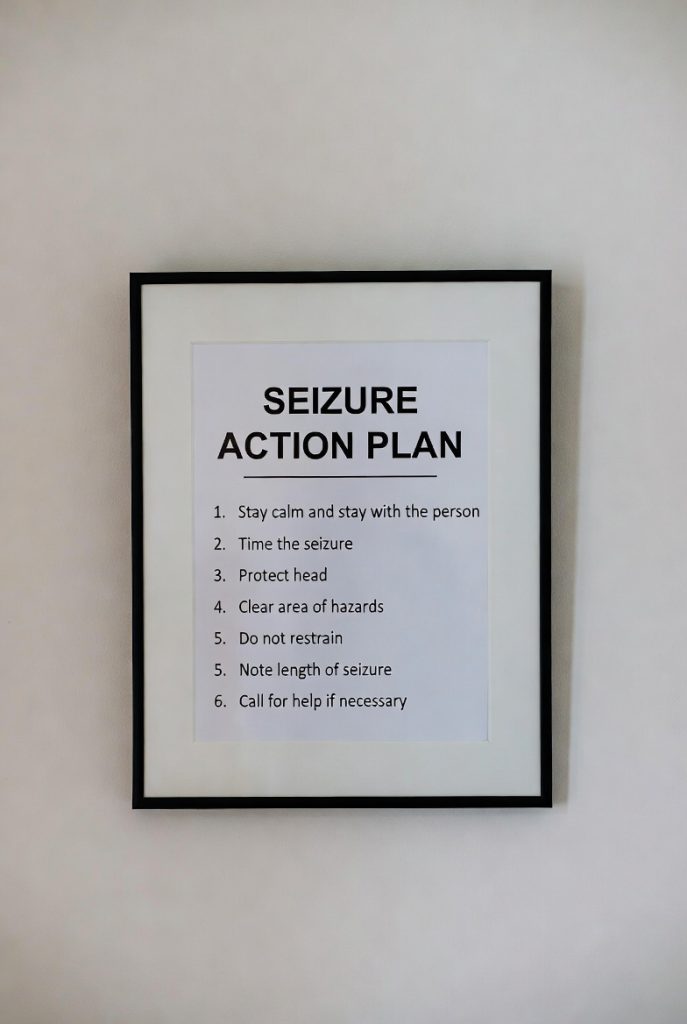
What is a SAP?
Seizure action plans are personalized, written documents created with your healthcare provider and include your diagnosis, a description of your typical episodes, and instructions for others witnessing the seizure on how to respond appropriately. They also typically include the name and number of your emergency contact person.
Sample SAP:
Seizure Action Plan
I am diagnosed with a seizure disorder (psychogenic nonepileptic seizures-PNES) or if you prefer, functional dissociative seizures (F/DS) although bear in mind that many emergency responders may be unfamiliar with the second name since it is relatively new.
During my episodes, I usually have the following symptoms (describe episodes, including pre seizure and during so observers can recognize these):
__________________________________________________________________________
____________________________________________________________________________________________________________________________________________________________
My episodes usually last ________________________
Please stay with me until I recover.
This is what to do if I have an episode like the one described above:
1) Keep me safe from injury. You may need to move me from an unsafe place, away from dangerous objects, and protect my head by placing soft clothing underneath.
2) Do not hold or pin me down. This can make the episode worse or cause injury.
3) Do not put anything in my mouth and do not give me medication.
4) Speak to me calmly. I may be able to hear and feel what other people are doing when I have an episode, and being spoken in a calm, reassuring manner can help shorten the episode.
5) My episodes do not cause damage to my brain.
6) DO NOT CALL AN AMBULANCE UNLESS I get injured, my episodes go for longer than my usual duration and/or they look very different from what I described above. If an ambulance is called, show this letter to the paramedics.
7) Typically, PNES does not require the administration of any rescue medications.
8) My emergency contact is (insert name) ___________________ and can be reached at (insert phone number): ________________
Keep in mind that your SAP should be personalized to your typical episodes, you may not need for someone to speak to you during your episodes or you may find it helpful to have an ice pack placed in your hand, etc. You should design your individualized SAP with your healthcare professional.
What are the benefits of having a SAP?
Improved safety and faster response in emergencies: SAPs guide caregivers, teachers, school nurses, coworkers, or bystanders on what to do (e.g., stay calm, position safely, avoid unnecessary 911 calls for brief seizures, know the emergency contact person to call).
Empowerment and reduced anxiety: For people with PNES and families, having a clear plan and instructions on what to do or not to do provides peace-of-mind, guidance and control. Especially when the person with PNES is out of the home, having a SAP can lower the patient and loved ones’ anxiety of “what if, a seizure occurs.”
Better communication across settings: Schools, camps, and workplaces may find a SAP very useful because it prevents miscommunication and ensures consistent, appropriate responses.
I hope you will take some time now, if you haven’t created a seizure action plan yet, to start putting together a Seizure Action Plan for yourself.
For more information on the Seizure Action Plan Coalition and to hear a few clips of me discussing topics about SAPs for PNES, click on the links below.
How is a SAP for PNES different than for epilepsy?
Some reasons are:
- you would not necessarily need to time the episode nor would you call for an ambulance if the seizure goes on for more than 5 minutes.
- You will likely not need to give rescue medication (unless this has been prescribed)
Learn more about Seizure Action Plans by clicking on these links: